
Loading...
Serving Costa Mesa, CA and surrounding areas. (949) 741-7402
Your patio already has the slab and the footprint - we add walls, windows, and a roof to give you a real room that works every season. Permits handled, coastal materials specified, no surprises after you sign.
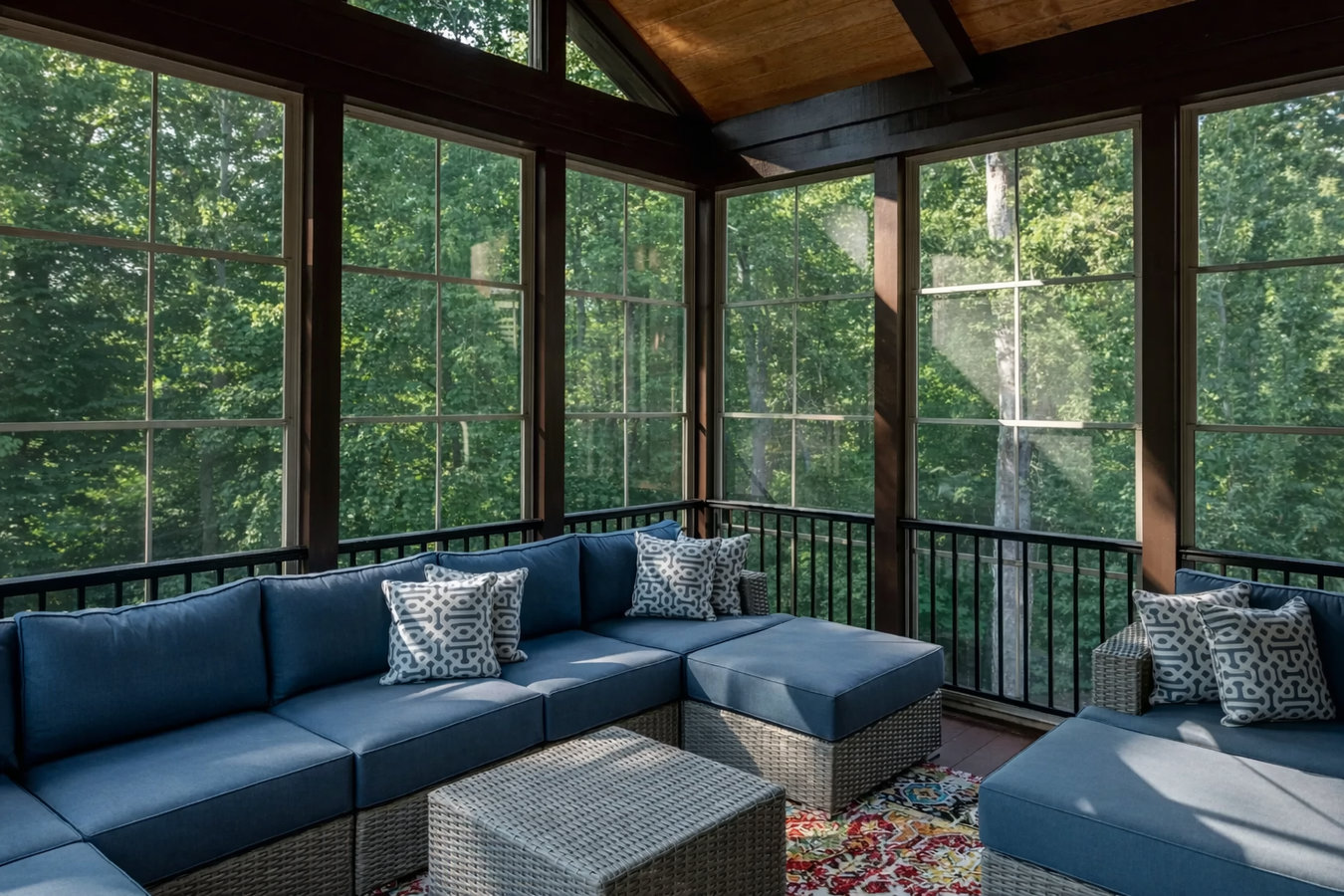
Enclosed patio rooms in Costa Mesa convert your existing open patio into a permanent, weather-protected living space by adding framed walls, windows or glass panels, and a roof to what is already there. Unlike a screen room or patio cover, a fully enclosed room keeps out wind, rain, and marine fog completely. Most projects take two to six weeks of construction once permits are approved, with total timelines from first call to finished room of three to five months.
An enclosed patio room is typically less expensive than a traditional room addition because it starts from your existing slab and exterior wall rather than building from scratch. Homeowners who want the maximum climate control and insulation may find a solarium installation or patio cover installation worth comparing, depending on how much light and climate control they are after.
If your outdoor space sits empty most mornings because of the coastal fog that rolls in off the Pacific, or you find yourself going inside by 7 p.m. because the temperature drops quickly after sunset, an enclosed patio room solves that problem directly. Costa Mesa's marine climate is beautiful but unpredictable - an enclosed room lets you enjoy the view without being at the mercy of the weather.
If the cover over your patio is warping, rusting, or letting in water, that is a signal a more permanent, protected structure would serve you better. Older aluminum patio covers in coastal Orange County neighborhoods are especially prone to corrosion from salt air, and patching them repeatedly often costs more over time than replacing them with a proper enclosed room.
If your family has outgrown your home's interior square footage - you need a home office, a playroom, a place to exercise, or simply a quiet room to read - an enclosed patio room is often the most cost-effective way to add livable space. It uses square footage you already own and does not require touching your home's existing footprint.
A fully enclosed patio room is typically less expensive than a traditional room addition because it uses your existing patio slab and exterior wall as a starting point. If you have gotten quotes for a room addition and the numbers felt prohibitive, it is worth asking specifically what an enclosed patio conversion would cost - the difference is often significant.
Every project starts with an assessment of your existing patio slab - we check thickness, condition, and whether it can support a permanent enclosed structure or needs reinforcement before framing begins. We use materials matched to the coastal environment: corrosion-resistant hardware, frames designed for salt-air exposure, and glass options that control solar heat gain so the room stays comfortable on warm afternoons without becoming an oven. Electrical work for lighting, ceiling fans, and any heating and cooling unit is planned during the design phase rather than wired in afterward.
We manage all permit filings with Costa Mesa's Building Safety Division and handle HOA architectural review submissions for neighborhoods with design guidelines. Homeowners who want a more fully climate-controlled build should also look at solarium installation, which maximizes glazing for light and heat. Those looking for overhead shade without full enclosure may find patio cover installation a useful starting point. We walk through the differences at the estimate visit.
Best for homeowners converting an open patio into a weather-protected room using their existing concrete slab as the foundation.
Suited to homeowners who want full climate control and year-round comfort in a space that handles both morning marine fog and warm afternoons.
Ideal for homeowners with an existing screen room who want to upgrade to a fully sealed, weatherproof enclosed patio room.
Costa Mesa sits about three miles from the Pacific Ocean, which means the air is often cool, damp, and salty - especially in the morning. That marine layer and salt air can corrode metal hardware and degrade lower-quality window frames faster than most homeowners expect. When we specify materials for an enclosed patio room in this area, we ask specifically about corrosion-resistant hardware and frames rated for coastal exposure. The Community Associations Institute notes that HOA architectural review processes vary significantly by community - something to plan for early when your neighborhood has a homeowners association. California also requires all new construction to meet earthquake safety standards, so the framing and connections in your enclosed room are engineered to flex and hold together during a tremor, not just look good from the outside.
Much of Costa Mesa's housing stock was built between the 1950s and 1970s, and many of those original patio slabs are now cracked or too thin to support a permanent structure without reinforcement. We check every slab before construction begins so you know exactly what the foundation situation is before you commit to a budget. We serve homeowners throughout the area, including communities in Westminster and neighborhoods across Garden Grove, and we bring the same permit knowledge and coastal material choices to every project.
Reach out by phone or through the contact form. We ask a few basic questions about your patio size, what you want to use the room for, and whether you have an HOA. That information helps us come to your home with useful ideas rather than a generic pitch.
We visit your home, measure your patio, assess the existing slab, and talk through your options for wall styles, window types, roofing, and climate control. You receive a written estimate that breaks down the major cost categories so you can compare us fairly against any other bid.
Once you sign the contract, we prepare the drawings and submit the permit application to Costa Mesa's Building Safety Division. If your neighborhood has an HOA, we prepare the architectural review package as well. This step typically takes six to fourteen weeks combined - we account for it in your timeline from the start.
Foundation or slab reinforcement happens first if needed, then framing, windows, roofing, and electrical. A city inspector visits at key stages. Once the inspection passes, we walk through the finished room with you, demonstrate every window and door, and hand over all permit records and warranty documentation in writing.
We pull the permits, handle HOA submissions, and assess your slab before you commit. No surprises - just a written estimate and a clear timeline.
(949) 741-7402We check your existing concrete slab during the estimate visit - thickness, condition, and whether it needs reinforcement before framing begins. If additional foundation work is required, that cost is in your written estimate before you commit, not discovered mid-project. Costa Mesa's 1950s-to-1970s housing stock means older slabs are common, and we know what to look for.
Salt air and morning marine humidity are harder on standard aluminum frames and hardware than most contractors account for. We specify corrosion-resistant hardware and window systems designed for coastal exposure so your room still looks and functions correctly five and ten years from now. This is a different specification than what a contractor in the Inland Empire would recommend for the same project.
If your neighborhood in Costa Mesa has a homeowners association - common in Mesa Verde, South Coast Metro, and Eastside communities - we prepare and submit the architectural review package before any construction begins. We know what these boards typically approve, which materials they accept, and how to present the project to avoid a rejection that adds weeks to your timeline.
We submit the permit application and handle all required city inspections before and during construction. Your finished room is fully documented and on record with the City of Costa Mesa. That matters when you sell - an unpermitted enclosure can surface as a problem in a buyer's inspection and complicate or derail a transaction. Learn about California building requirements from the California Department of Housing and Community Development.
Every enclosed patio room we build in Costa Mesa starts with an honest assessment of your existing structure and ends with a fully permitted, inspected room that adds documented value to your home. That is the standard we hold every project to.
Maximizes natural light with floor-to-ceiling glass panels - a step up from a standard enclosed room for homeowners who prioritize sunlight.
Learn MoreOverhead protection without full enclosure - a practical option for homeowners who want shade and rain cover while keeping the space open-air.
Learn MorePermit slots fill up at Costa Mesa's Building Safety Division - the sooner we submit your plans, the sooner you have a finished, protected room. Call or send us a message to get started.